On the waterMarbella
Jet ski hire rules along the Marbella beaches
Jun–Sep
Most jet ski hire on this coast is fifteen minutes inside a marked square of water, and the small print matters more than the machine. Where you may legally go, what the licence threshold turns on, why the damage clause is harsher than on a car, and when the guided excursion is worth the extra.
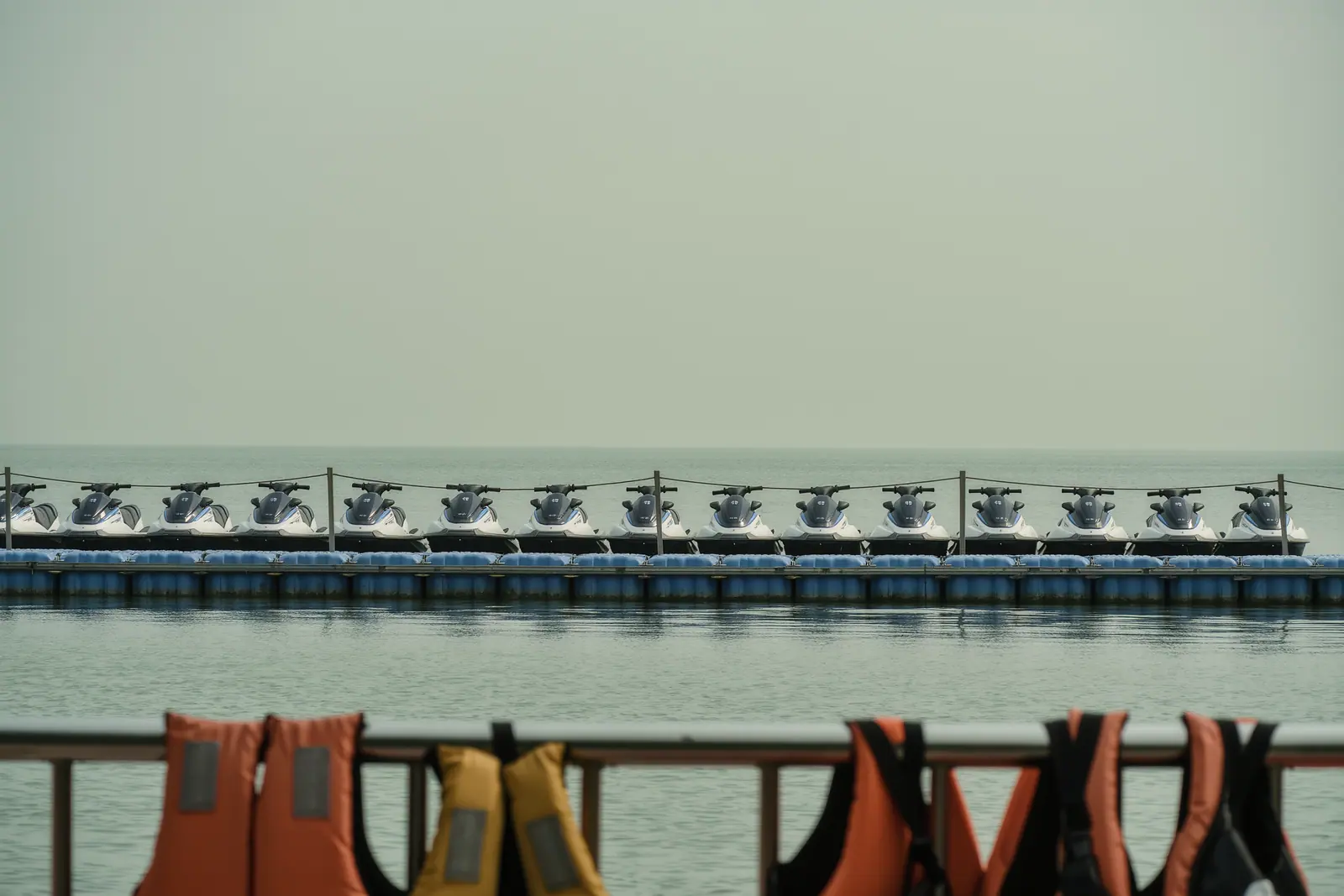
Along the beaches either side of Puerto Banús, from the strip below the Golden Mile round to San Pedro and out towards Cabopino, the summer brings a line of small operations on the sand: a pontoon or a launch trolley, a rack of life jackets, and two or three machines going round in circles a couple of hundred metres offshore.
That last detail is the part worth understanding before you pay. The great majority of jet ski hire on this coast is a short slot inside a defined area of water, not an expedition, and the rules that produce that arrangement are worth knowing whichever product you end up buying.
The water is divided up, and the lines are real
Through the bathing season the Marbella beaches are buoyed. There is a swimming zone next to the shore that craft may not enter, and there are marked access channels through it that boats and personal watercraft use to get in and out at very low speed. Beyond that, hire operations generally work inside an area agreed with the authorities.
These are not decorative. The zones are patrolled, breaching them is an offence, and the reason they exist is that a machine capable of fifty knots and a child standing in waist-deep water are a bad combination. A hire operator who is casual about this is a hire operator to walk away from.
The other boundary is the harbour. The entrance to Puerto Banús is a working channel with yachts manoeuvring in it. Wash and speed inside a port are regulated, and it is not somewhere to take a jet ski for a look around.

Licences, in general terms
Spain sets the thresholds for personal watercraft nationally, based on the power of the machine and the type of use, and they are the kind of rule that changes. The general shape is that low-powered craft can be hired against a short briefing and a basic navigation authorisation, that more powerful machines require a recognised qualification, and that a guided excursion led by an instructor can operate differently again because the professional is the one holding the responsibility.
Do not take a beach operator’s word on which category your machine sits in. Ask what the power output is, ask what qualification the hire requires, and verify it with the maritime authority if you are in any doubt. Life jackets are mandatory, minimum ages are set nationally, and the rules on alcohol apply at sea as they do on the road.
Three products, sold as one
| Format | Typical length | What it is | Worth it? |
|---|---|---|---|
| Short slot | 15–30 min | Circuits inside a marked area | With children, yes. Otherwise no |
| Extended slot | 60 min | The same area, longer | Only if the area is generous |
| Guided excursion | 1–2 hours | Coastal run behind an instructor | The one that is actually a ride |
| Licence-holder hire | Half or full day | Independent use, subject to qualification | Rare, and worth asking about |
The gap between row one and row three is the whole thing. Fifteen minutes is over before you have stopped gripping the bars. A guided run west along the coast past San Pedro and Guadalmina, or east under the Golden Mile, is an hour of open water with somebody who knows where the buoys are, and it costs several times as much for a reason.
The damage clause, which is harsher than a car
This is where jet ski hire diverges sharply from every other rental on this coast.
Third-party insurance for personal watercraft is compulsory in Spain and any legitimate operator will have it. Damage to the machine itself is a different matter, and hire agreements here commonly make the rider liable for the full cost of repair, with no waiver product available at any price. There is no equivalent of the excess reduction sold at a car hire counter.
A flipped machine, a swamped engine, an impeller destroyed by sand in shallow water or a hull grounded on the beach can all produce a four-figure bill against a deposit that was a fraction of it. The card hold is not the limit of your exposure. Ask directly what the maximum liability is, and if the answer is vague, ask for it in writing. The general principles are the same ones set out in what a charter deposit covers on this coast, but the risk sits much more squarely on you.
The weather that decides the day
A levante builds short, steep chop along this coast within a few hours and it is the reason a booking gets cancelled. Riding into it is genuinely tiring and unpleasant, and hire operations suspend when it gets up. Mornings are calmer than afternoons through the summer, and an early slot is a better slot.
The alternative worth pricing
For a group, jet skis are an inefficient way to buy time on the water. Four machines for an hour is a substantial sum for four people going in circles, and nobody can talk to anybody.
A hired rigid inflatable with a competent driver, or a small self-driven boat inside the licence-free limits, puts the whole group on the water for a half day for a comparable figure, with a cool box and somewhere to sit. The comparison is in tender and rigid inflatable hire for a group, and if the plan is the coast rather than the machine, a proper day out is set out in a day charter out of Puerto Banús.
What to check before you book
- Ask whether the machine you are being given falls below the licence threshold, and verify the current thresholds with the operator and the maritime authority rather than assuming.
- Establish what happens if the machine is damaged. On most contracts the rider is liable for the repair in full, not up to an excess.
- Confirm whether third-party cover is in place for the craft, which is compulsory in Spain, and ask to see that it is current.
- Ask where the permitted area is and have it pointed out on the water, not described on the beach.
- Check the minimum age for both the rider and any passenger, and bring identity documents for whoever will be at the controls.
- Ask what the operator does about wind. A levante builds a short chop that turns a pleasant half hour into a beating.
Questions people actually ask
- Do I need a licence to hire a jet ski in Marbella
It depends on the power of the machine and on how the hire is structured. Spain sets the thresholds nationally, and below a stated power a short briefing and a basic navigation authorisation can be enough, while more powerful craft need a proper qualification. Guided excursions are often run under the operator's own licensing with an instructor leading. Verify the current position with the operator and the maritime authority before you book.
- Where am I allowed to ride
Outside the buoyed bathing zones, which are laid along the Marbella beaches through the summer, and reached only through a marked access channel at very low speed. Most hires keep you inside a defined area of water rather than letting you go where you like. Riding through a swimming zone is both dangerous and an offence, and it is patrolled.
- What does jet ski hire cost here
It is sold in short blocks: fifteen, thirty or sixty minutes, priced per machine rather than per person, and rising through July and August. A guided coastal excursion of an hour or two costs several times a fifteen-minute go and is a genuinely different product. Expect the shoulder months to be materially cheaper for the same slot.
- What happens if I damage the machine
Usually you pay for it, in full. Personal watercraft hire contracts on this coast commonly hold the rider liable for the cost of repair rather than capping it at an excess, and there is often no waiver product on offer at all. That is a very different risk profile from a hire car and it is the main reason to read the contract before you sign it on a beach.
- Is a fifteen-minute hire worth it
As a novelty with children, yes. As a way to see the coast, no. Fifteen minutes inside a marked square of water is exactly what it sounds like, and by the time you are comfortable on the machine the slot is over. If the point is the ride rather than the photograph, book a guided excursion of an hour or more and treat the short slots as a fairground attraction.