On the waterMarbella
A day charter out of Puerto Banús, and what it really involves
May–Oct
This is not the Balearics. The coast off Marbella is straight and open, there are no coves to hide in, and a day charter is a run along the shore with a swim stop rather than a tour of anchorages. What the day looks like hour by hour, how the money is built up, and the one document worth asking to see.
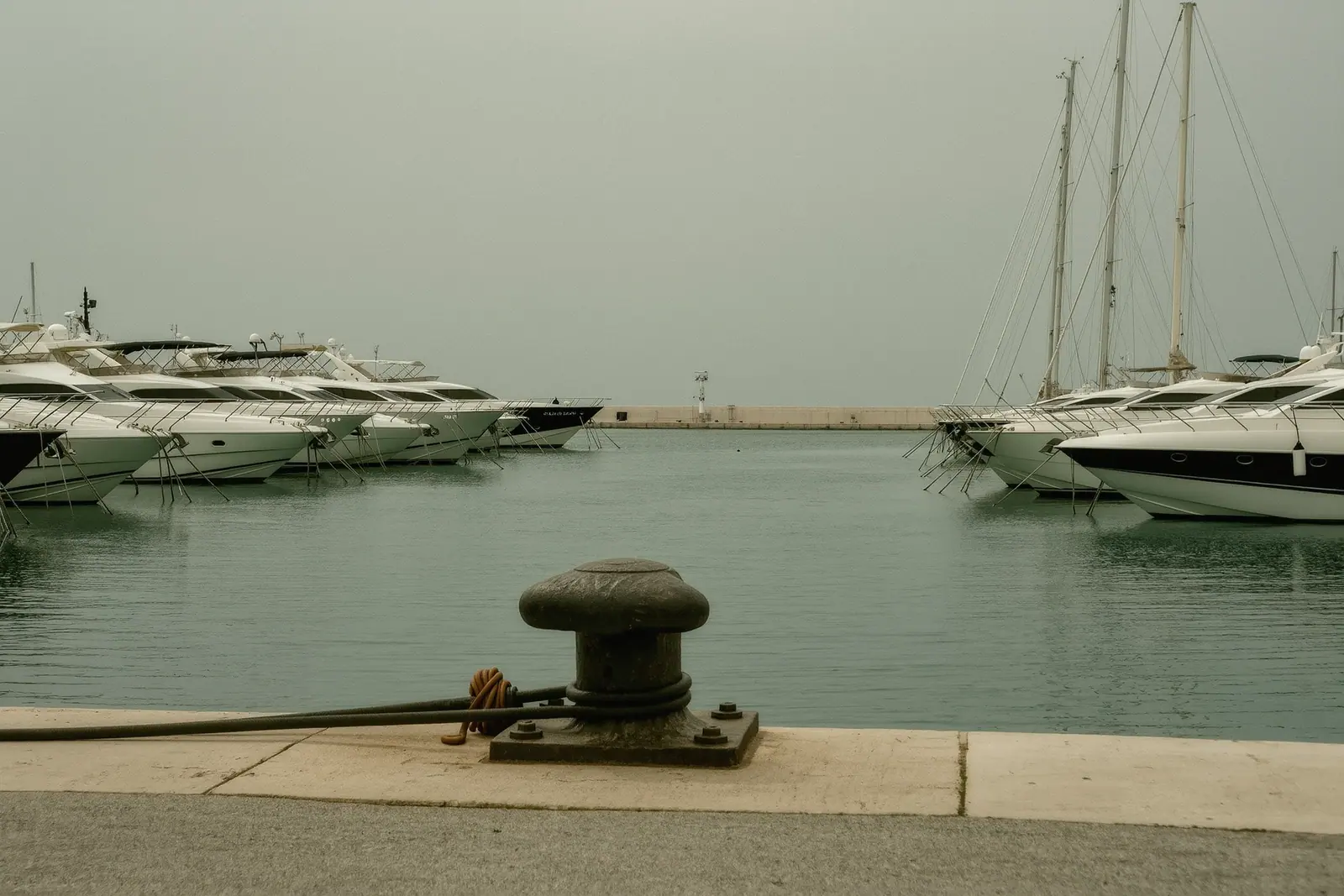
The first thing to understand about chartering from Puerto Banús is what this coast is not. There are no islands. There are no calas. The shoreline from Estepona to Fuengirola runs almost straight, exposed to whatever the Alborán Sea is doing, and there is nowhere to duck into if the wind gets up.
That single geographical fact defines the entire product. A day charter here is a run along the coast with the shore a mile or two off your beam, one or two swim stops anchored in sand off a beach, lunch aboard, and back to the berth before the afternoon breeze fills in. Anyone selling you a day of island hopping is selling you a different sea.
Understood on those terms, it is a very good day out. Misunderstood, it is an expensive disappointment.
How the day actually runs
| Time | What happens | Worth knowing |
|---|---|---|
| 20–30 min before | Arrive at the berth, identity documents, safety brief | Parking is the reason people are late |
| Departure | Slow out through the harbour entrance | No wake inside the port |
| First hour | Coastal run, west or east depending on wind | The direction is chosen on the morning, not in advance |
| Late morning | First anchorage, swimming, tender or paddleboard | Depth and seabed decide the spot, not the view |
| Midday | Lunch aboard, engines off | Warmest, calmest part of the day |
| Early afternoon | Second stop or the run back | The sea breeze usually builds now |
| Return | Alongside, settle fuel and extras | Fuel is often billed here, not before |
Morning is the good part. In summer the sea off Marbella is glassy at nine and choppy by three, because the afternoon breeze builds reliably along this coast. An early departure buys you calmer water for the swim stops, and it is worth choosing an operator whose slot starts earlier over one whose boat is slightly nicer.
Wind decides the itinerary
Two winds matter here and a skipper will tell you which one you have before the lines come off.
A levante, out of the east, funnels down the Strait and builds a short steep chop that makes the run east towards Fuengirola genuinely unpleasant. On a levante day the boat goes west, and the anchorages west of Guadalmina are the practical ones.
A poniente, from the west, is generally gentler here and reverses that logic.
In a strong levante the honest answer is that the day is not worth doing. Ask what the operator’s cancellation policy is for weather and who makes the call, because a marginal day at anchor with everybody feeling ill is worse than a refund.
Where the boat can anchor
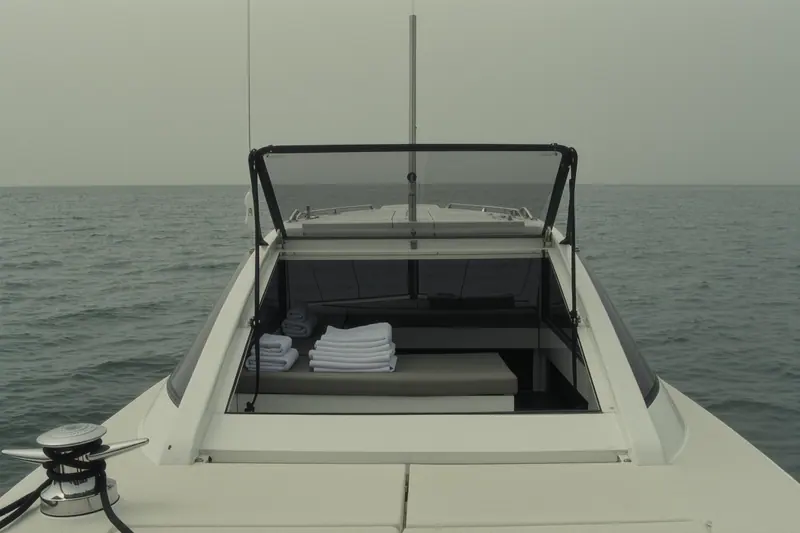
Anchoring off this coast is a question of seabed rather than scenery. Sand holds; seagrass does not, and in Spanish waters seagrass meadows are protected, so a competent skipper avoids them for legal reasons as well as practical ones. That is why the anchorages used repeatedly are a handful of sandy patches off specific beaches rather than wherever looks nice.
The usual stops sit off the beaches either side of the marina, off the river mouths towards Guadalmina and San Pedro, and further east towards Cabopino, where the dune system behind the beach is a protected natural area. Boats stay well off swimming zones, which are buoyed through the summer, and approach the shore only by tender.
The money, built from the bottom
A quoted day rate on this coast rarely covers the day.
- Base charter fee. The boat and its skipper for the slot.
- Fuel. The big one. A planing motor yacht at cruising speed consumes fuel at a rate that surprises people, and several hundred euros in a day is normal rather than exceptional. Included, capped or billed at cost — establish which.
- VAT. Spanish charter prices are frequently quoted before tax. Ask.
- Crew beyond the skipper. A hostess or a second crew member is a separate line. What that buys is set out in skippered or crewed, and what the difference costs.
- Catering. Anything from bring-your-own to a provisioned lunch with a shopping list attached.
- Extras. Water toys, a paddleboard, tender fuel, ice.
- The security deposit, which behaves nothing like the others and is covered in what a charter deposit covers.
Two quotes are only comparable once all seven lines are visible on both.
The question to ask before you pay anything
Ask whether the boat is registered for commercial charter in Spain.
Commercial charter here requires the vessel to be on the appropriate register, with the certification, insurance and crew qualifications that follow from it. A privately registered boat taking money for a day out is not a charter, whatever the listing calls it, and the practical consequences fall on you: the passenger insurance may not exist, the port paperwork may not be in order, and if the authorities intervene your day ends at the quay.
A legitimate operator answers this question without hesitation. Hesitation is the answer.
Practical things that ruin otherwise good days
Parking. The marina car park fills, the approach is slow in August, and arriving flustered eight minutes before departure is a poor start. Allow for it using the shape set out in the valet and parking economics of Puerto Banús.
Identity documents. The boat needs a passenger list to clear the port. Send full names and document numbers ahead rather than standing on the quay reading passport numbers aloud.
Shade. More people are defeated by the sun on this coast than by the sea. A boat with a decent bimini and a shaded aft deck is worth more than an extra two knots.
Timing the booking. If the slot matters more than the boat — and for most groups it does — book the slot first. The way the day is carved up between full, half and sunset departures is explained in how the charter slots work, and the short slots are the ones that disappear.
What to check before you book
- Ask whether the boat is registered for commercial charter in Spain. A private boat sharing costs is not a charter and you are not a paying passenger on it.
- Get the fuel arrangement in writing: included, capped, or billed at cost afterwards. On a planing motor yacht this is the largest variable in the day.
- Confirm the certified passenger capacity rather than how many people fit on the deck. The certificate sets the number, not the seating.
- Send full names and identity document numbers ahead. The boat needs a passenger list before it clears the port.
- Ask whether the price shown includes Spanish VAT, because charter quotes on this coast are often stated before it.
- Check what the anchoring plan is if the wind is easterly. A levante day changes where the boat can realistically stop.
- Ask what is aboard and what is not: towels, ice, a paddleboard, the tender, and whether tender fuel is extra.
Questions people actually ask
- Where does a day charter from Puerto Banús actually go
Along the coast rather than to anywhere. West towards Estepona and the Sotogrande shoreline, or east past the Golden Mile towards Cabopino and Fuengirola, with one or two swim stops anchored off a beach. There are no islands and no sheltered coves on this stretch, so the itinerary is defined by the wind direction on the day rather than by a fixed route.
- How much does a day charter cost here
Small motor yachts sit in the high hundreds of euros for a full day in the shoulder season and comfortably into four figures in August. Larger boats with crew are a different order again. What varies most is not the base rate but the fuel, which on a planing hull can add several hundred euros to a single day at cruising speed.
- Is fuel included
Sometimes, often not, and this is the question that decides whether two quotes are comparable. Some operators include a set number of running hours, some cap consumption, and some hand you a bill at the end based on what the tank took. Ask which model applies and what a typical day costs on that boat before you compare anything.
- How many people can come
The boat's certificate sets the number and it is not negotiable at the passerelle. Twelve passengers is the conventional ceiling for commercially certified yachts of this size, and above that the vessel needs different certification entirely. Count children in the total, because the certificate does.
- How far ahead should I book
For a July or August weekend, several weeks, and the popular slots go earlier than the boats do. Midweek in June or late September you can often book within a few days. The half-day and sunset slots clear before the full days because they are cheaper and more people want them.